

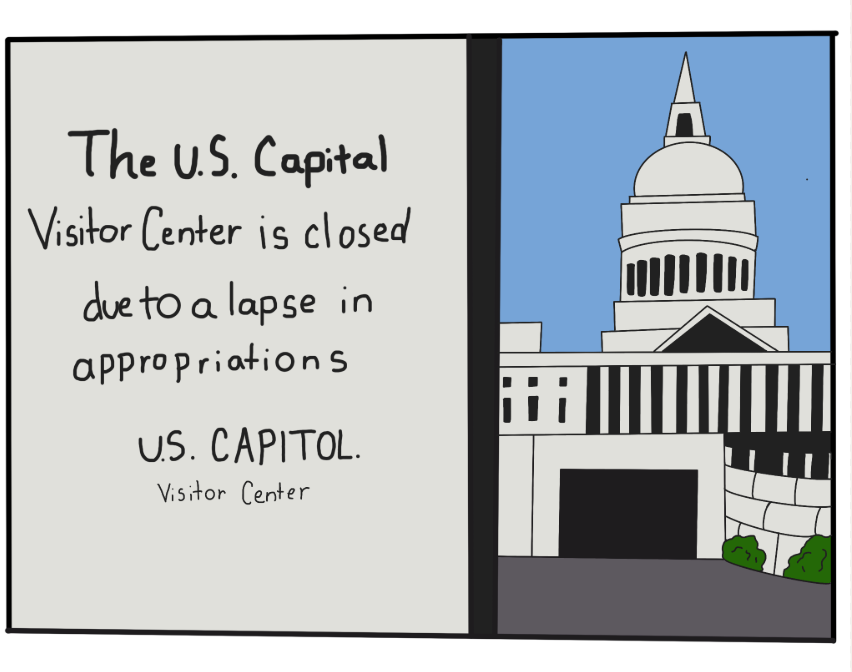
On Oct. 1, the U.S. government shut down due to Congress not passing the necessary bills for financing government operations. Programs such as the Supplemental Nutrition Assistance Program (SNAP) and others supported by federal grants could be affected if the shutdown drags on. In some cases, it already has.
The shutdown has sparked political division around the country with people throwing the blame either to the Democrats or the Republicans, but not everyone is concerned about the political side of the shutdown. Others are worried about how it affects the community.
“I think it’s stupid because they’re not paying governmental employees,” sophomore Jackson Capps said.
While the shutdown is largely affecting government workers, another big concern is the pausing of benefits like SNAP.
“The biggest thing I think we worry about with the government shutdown is a lot of our students are on food stamps,” EL department chair Amy Peddie said. “ And we’re worried that it will affect their food security and (they might) come to school hungry and we don’t want that.”
Although some families within the community may be negatively affected by the pause of SNAP benefits, there are private organizations working to help those in need.
“Exodus Refugee, which is like a refugee organization that helps in events in Indianapolis, they were given large donations of culturally appropriate food that they were planning on handing out if families came or expressed a need,” Peddie said.
There are more alternative ways for people who are struggling to get help through community-run projects like the Big Red Box Project. Where members of communities come together and donate food to give to those in need.
Currently, the government is back up and running. But this doesn’t erase the hardships that people affected had to endure.
But it does show that even through tough times, communities can come together to help those in need.
“That made me feel kind of proud of my community, to see that they would come together like that,” Peddie said.
