

 As summer transitions into winter, the days grow shorter and much darker. The warmth from the previous season slowly fades away.
This change in seasons doesn’t just affect the weather, it affects people too. For some, motivation drops, exhaustion increases and everyday routines begin to feel heavier than usual.
This phenomenon, known as seasonal depression, is experienced by many students and adults as they push through winter.
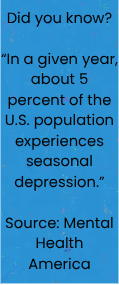
According to a 2022 Healthy Minds Monthly poll by the APA, about 24% of Americans report feeling generally depressed during winter, 38% say their mood declines in winter, and 66% note behavioral changes in the season.
Here are some tips from the SHS community that can help those who struggle with seasonal depression.
 Psychology teacher Reid Fawcett explained that while there are several theories, there is no single proven cause for seasonal depression.
“Seasonal depression normally occurs in the fall and winter months when in what we think is because of daylight times are being shortened, which is causing an imbalance of serotonin,” Fawcett said. “(This) then resolves in symptoms like negative thoughts, possible weight gain, loss of interest in things that you are normally interested in.”
Fawcett’s stance on the matter is that the disorder usually happens for a limited amount of time, but if symptoms continue to persist for several months, it’s best to seek out professional help.
“Seek out help. It’s not something that you alone have only dealt with,” Fawcett said. “Multiple people have dealt with that, and when you’re dealing with self-esteem issues and losing interest in things you have previously done before, the best way to approach that would be to seek out assistance.”
 Counselor Annie-Marie Burris, who has worked with students for three years, has seen firsthand how much impact change can have on mental health.
“Mental health, we’ve seen a big rise in it, (especially) during Covid,” Burris said, “During, or after covid, we’ve definitely seen that spike. I think covid alone caused that spike.”
She emphasizes that while mental health resources in the country may not always meet the demand, counselors are always there to provide support and make sure that students have someone they can reach out to for help.
“Everybody varies. For some people, they don’t like cold weather. For some (other) people, they don’t like that it gets cold earlier,” Burris said. “Winter time can get stressful, especially for seniors going through their last little bit of school (and) applying to colleges.”
Burris also emphasizes the importance of focusing on the positives, even on bad days.
“Try to find one positive in your day,” Burris advised. “(It) could be the worst day of your life, but if you really reach for one positive, that could turn your day around.”
 Freshman Christina Thiam, a member of the Psychology club, strongly believes that seasonal depression is real and has a serious impact on mental health.
“Winter has a real impact on people’s mental health. Less sunlight, colder weather and days can affect mood and energy,” Thiam said. “When everything outside feels dull, it’s easy for that feeling to settle in as well.”
Thiam has experienced it firsthand.
“Waking up at 5:30 (a.m.) in the dark, going through the school day and staying late for activities, whether it be clubs or helping others, makes everything feel heavier,” Thiam said. “The gloomy weather definitely contributes.”
Thiam advised those who struggle with seasonal depression to remember that feeling down around this time of year does not mean things will stay like that permanently, and things can improve with time.
 Junior Ja Chan has felt the upsetting side effects of winter.
“Winter definitely affects people’s mental health. On a summer day, you feel energetic and want to go out. But when it’s snowing or raining, you feel tired and gloomy,” Chan said. “Even in this weather, it’s too cold to see or do anything, and I feel sad that I can’t see my friends.”
For any student struggling with seasonal depression, Chan encouraged finding support in friends.
“Talk to your friends. If they really care about you, you feel comfortable opening up to them, you’ll feel better,” Chan said. “It personally helps me feel better, and it gives you a sense that someone cares.”
 Senior Thang Khai acknowledges that while seasonal depression may be real, he believes that people often let the weather dictate their mood.
“It’s so prominent because you’re going outside everyday, so you’re feeling the effects of the weather and your morale,” Khai said. “This is just a me thing, but there’s just so much in life to be happy about… I do come to school dreading being here. But at the end of the day, I’m happy because I get to see my friends and socialize.”
Khai’s advice for this matter is to find and persist in doing activities that bring happiness.
“Find the things you love to do, and do them daily,” Khai said. “For me, that’s music and hanging out with friends. For others, it could be playing games, cooking, or baking.”
