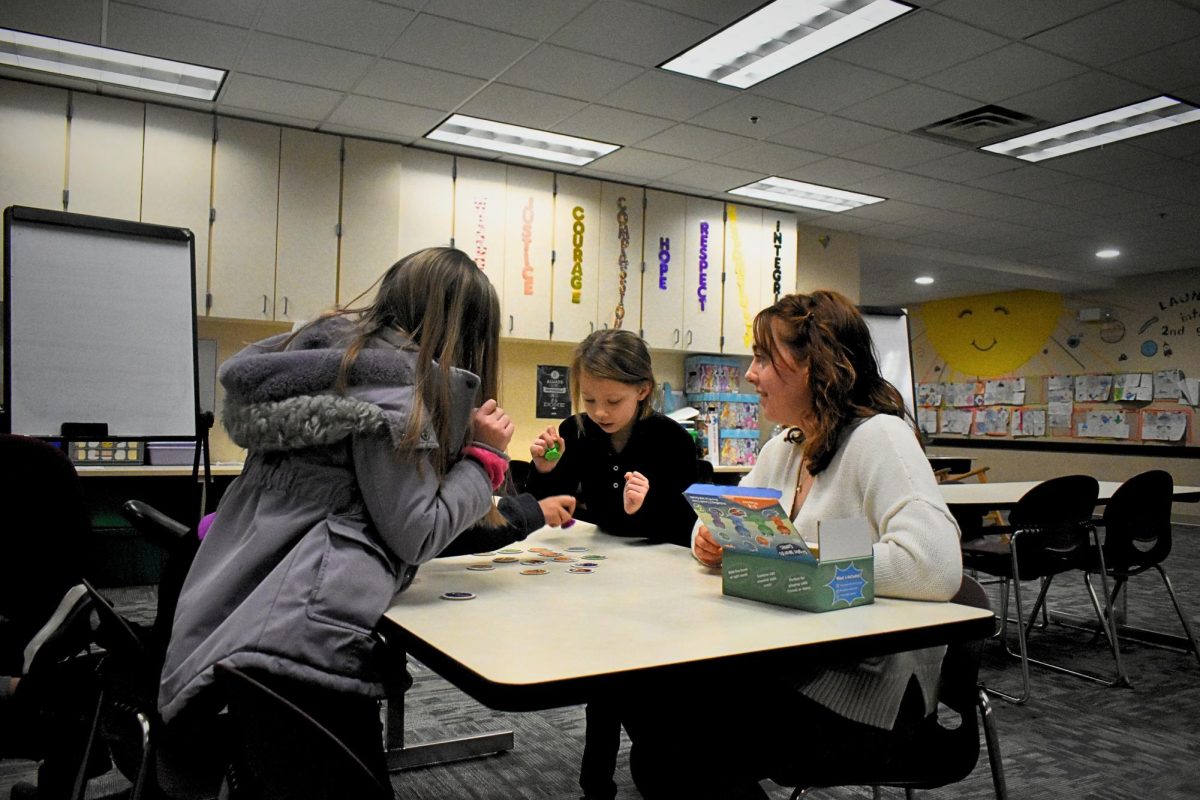
Eyes sparkling with excitement, the elementary school kids on the playground bolted over to hug senior Morgan Harmon as she walked out to greet them during their recess time.
At first, she felt overwhelmed by the crowd of screaming children besieging her, but after she found some distance from them, she realized how truly sweet the moment was.
“It just makes me want to come back every single time,” Harmon said. “I never have a boring day there.”
This took place after she arrived at Jeremiah Gray Elementary during her cadet teaching period, prepared to observe lessons and gain knowledge about educational practices. She is one of the many students who participate in this program at SHS.
Cadet teaching, as well as the rapidly expanding Early Childhood Education pathway, gives students the opportunity to immerse themselves in real classroom environments and prepare for a career in childcare while they’re still in high school.
“I, at first, chose this class… (just to get) a robot baby,” Harmon said. “Then, as I was entering the elementary schools and hanging out with the kids,… I just fell in love with being in that place… so then it made me want to immerse myself even more into the classroom and have it become a career later on.”
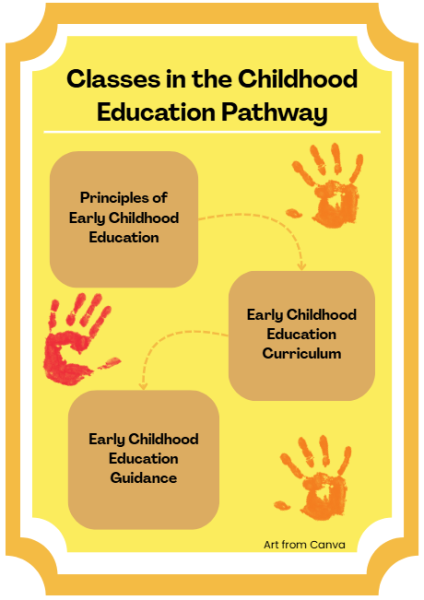
The full pathway consists of three subsequent full-year classes as well as the Cadet Teaching elective, and it is entirely taught and managed by teacher Danielle Grehn. The first year of Grehn’s class, Principles of Early Childhood Education, is largely information based and mostly consists of in-class learning at SHS.
In the following year, students begin going to other schools during their assigned period to connect with younger students and assist teachers with lessons and classroom management.
This entails students spending a few hours a week for six weeks at PTECH Preschool, as well as any kindergarten academy and elementary school of their choosing in the district. The goal of this opportunity is to give students the chance to experience education at various levels and allow them to get an idea of which one they enjoy most.
In the final year of the pathway, students get to utilize their familiarity with each environment and choose the school where they want to continue their assistance.
“They spend a little bit of time in each setting, so that way, when it’s their third year, it’s kind of like their practicum,” Grehn said.
Because of this interactive experience, students get a head start on building the necessary knowledge needed to go into education before starting college.
With lower amounts of pressure burdening them, they are able to easily get comfortable helping younger students regulate their emotions and develop their fine motor skills. They also learn how to create a safe and welcoming environment for kids in a classroom setting.
“(Oftentimes,) I’m a little focused on one kid just because that kid isn’t having the best day,” senior Lilly Spaulding said. “So I’ll sit with (them), and I’ll help (them) get through the day.”
Additionally, students often end up connecting with more than just the kids. The teacher of the class that they get assigned to will act as a mentor and help them develop their instructional skills in action.
Because of those established relationships with teachers and administrators, students have a greater chance of being hired at those schools while looking for career opportunities after college.
Looking forward, Grehn has already seen more seniors this year aspiring to pursue teaching careers after they graduate than previous years, and she hopes that the pathway will continue to empower more students to do so in the coming years.