


When Braxton Gibson was 5 years old, he was struck awake in the middle of the night. His chest tensed up, his throat tightened and his eyes filled with fear.
As he gasped for what felt like his last breaths, he was rushed to the hospital, encountering what would be both his first and worst asthma attack to come across his life.
Years passed and the attacks continued, yet a visit to the doctor’s office in mid-November secured him an opportunity to tame his asthmatics.
During this visit, Gibson discovered that he could participate in clinical trials as a medical tester to treat his asthma. Even in spite of his lengthy fight with asthma, these trials will allow him to live a more composed life.
“If I can figure out if the medications get enough for the kids, then I’ll be able to help kids in the future,” Gibson said.
Now a sophomore, Gibson continues partaking in these trials in order to help researchers prevent the severity of asthma for children who suffer the way he does.
A clinical trial is a regulated research study. It involves human volunteers and evaluates the safety and effectiveness of any new medications not available to the public yet.
The trial that Gibson takes part in is the study for albuterol, which is the rescue medication for asthma.
He’s required to blow into a small machine twice a day. This machine then tests how well the medication works and sends the results to the doctor.
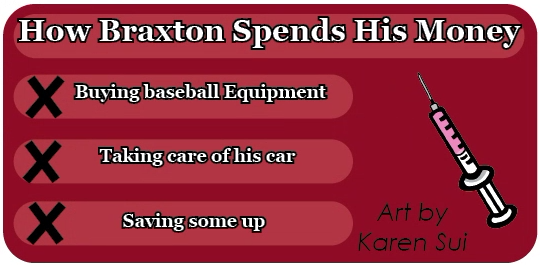
Everyday he records his results, Gibson receives $4.50 as an incentive to keep him tracking his progress.
For the last four months, this is what Gibson’s life has looked like, and the process will continue until a year after the study opens in November.
“That’s just what you do every single day while having asthma,” Gibson said.
Coping with his illness isn’t only worrisome for Gibson, but for his mother, Katie Fesler as well.
And because he’s been asthmatic since infancy, Fesler’s been able to grasp onto any indicators of an attack.
“I always watch for his signs, (which) I learned as I was raising him,” Fesler said.
Alongside managing surprise attacks, Gibson has also worked to adjust to the rigor of athletics, even if it’s challenging.
Unlike other children, he grew up carrying an inhaler with him throughout any sort of physical activity.
“My fears are not being able to do the sports I want to and limiting me to a certain level,” Gibson said.
Minimizing attacks is his biggest priority. So to control his asthma, Gibson takes steps to prevent flare ups by taking allergy pills daily and keeping an inhaler on close notice at all times.
“The goal is to keep it controlled but also have medications that can help him prevent (the attacks) or make them shorter,” Fesler said.
While the drug is approved for adults, Gibson’s role in the study is to show that teens 12 to 17 years old are safe to be medicated the same way adults are.
Through the hardships he’s faced, Gibson’s learned to cope and push through with endurance. He knew he was creating a brighter future for children suffering the way he does.
“I’m proud of myself for doing the study and figuring out the medication,” Gibson said.
