

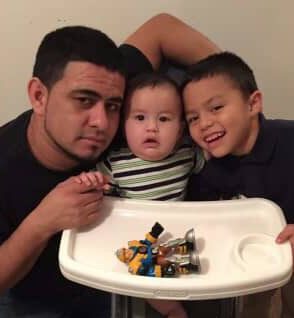
Dilan Posada was only 7 years old when he was kept home from school because no one knew where his father was or if he was coming back.
Every conversation his family had that morning was laced with panic and desperation.
Amidst multiple frantic phone calls from different loved ones, Posada’s mother received one call in particular that would leave her shattered by despair. After the call ended, she told her son the news.
His father was gone.
He didn’t know how or why, but his family did, and they couldn’t bring themselves to tell him the entire story. His father didn’t just suddenly pass away, his death was intentional.
He was murdered.
Despite undergoing this tragic loss, Posada, now a sophomore, takes peace in his belief that even the most devastating occurrences happen for a reason.
“It’s given me the ability to share my sadness and my trauma with other people, especially people who have gone through the same thing,” Posada said. “I feel like that’s my purpose, to help other people realize that they’re not alone.”
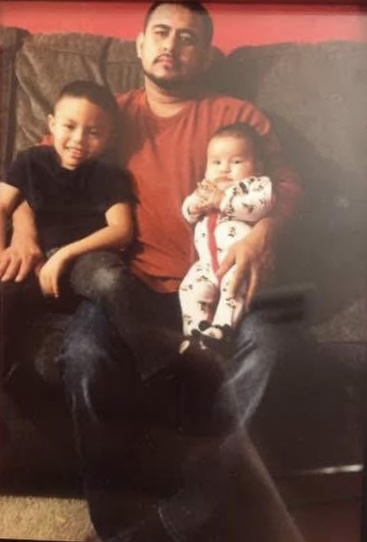
On a summer evening in 2017, Posada’s father, Wilson Eduardo Posada Hernandez, shared dinner with his family as usual. After the day faded into night and Posada and his brother drifted to sleep, Wilson left their home to share drinks with a friend, Milton Zambrano Gonzalez.
During a night that was intended to be relaxing and lighthearted, a miscommunication occurred in which Gonzalez thought that Wilson had sexual intentions with his girlfriend. This led to an altercation that would leave emotions high and tensions heavy.
At the end of the night, Gonzalez insisted that Wilson sleep on the couch because he was too intoxicated to drive home.
Wilson agreed, as he felt safer in the home of a friend than on the roads. Little did he know, safety wasn’t the intention behind Gonzalez’ invitation.
While Wilson was asleep, Gonzalez grabbed a kitchen knife, walked over to his unguarded body and stabbed him in the stomach.
Wilson jolted awake and fought for his life. Gonzalez persisted anyway, repeatedly stabbing him.
One. Two. Three. Four. Five. Six. Seven. Eight.
The blood spilled out of his body, and the struggle halted.
He then laid lifeless, betrayed by a man he trusted and robbed of the opportunity to live out his life as a father and husband
This event left Posada with a burden that he wasn’t yet prepared to carry. If his mother’s verbal confirmation wasn’t enough, her unending tears were his foolproof sign that this was real and his father was never coming back.
In the weeks following his father’s murder, he could feel the sadness and devastation that surrounded him. However, since he was so young, he wasn’t able to fully comprehend how tragic the loss was. His emotional scars continued to grow and change shape as he grew up.
“I was so young that I didn’t understand what was happening,” Posada said. “I didn’t know what I was feeling at that moment. I started grieving more as I got older.”
For quite some time, he believed that this occurrence proved that life was unfair. He felt that it wasn’t fair that his father’s life was cut short and that he and his brother would have to grow up without their father, and his mother, without her husband.
Posada says that one of the most difficult parts of his father’s murder was witnessing how his mother was impacted.
“My dad’s death had a big toll on her,” Posada said. “She’s not been the same after that.”
His mother began to work more hours to accommodate for the loss of income from his father, and as a result, Posada had to learn how to take care of both himself and his brother. He felt that it was his responsibility to become the man of his household before he even reached adolescence.
By the time he was 12 years old, he began helping out his family for money and often assisted his mother with paying for food and groceries to financially support her.
Despite his willingness to step up, Posada took on these new responsibilities at a time when he was still actively processing and grieving his father’s death, and it began to take a toll on his mental health.
The emotional anguish that he endured led him to feel that God didn’t truly love him, and that his situation was helpless.
Despite his hesitance, he joined youth groups and attended church events with his family, and this opened his eyes to Christianity.
Feeling trapped in his grief, he sought solace in his religion. He began to read the Bible more than ever before, and he gradually incorporated its teachings into the way he viewed the world around him.
Eventually, his newfound perspective helped him process his situation differently. He now believes that the suffering he experienced has given him the ability to see the quiet blessings that this loss brought to him and his family. He feels that it’s important to find light in every situation, even difficult ones.
“After tragedies, although they may seem painful … they’re actually good for you because they teach you lessons,” Posada said.
He now moves through life with the notion that everything that happens, regardless of the apparent good or bad impact, is part of God’s plan and is happening for a reason.
He feels that losing his father strengthened both his faith and his ability to love and forgive others, and now that his father has been gone for almost nine years, he has reached a point that he never thought he would get to.
He has chosen to forgive his father’s murderer.
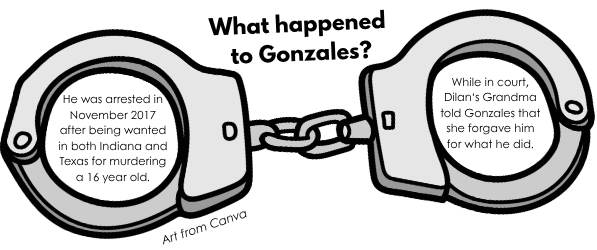
He says that because no one will ever know what trauma Gonzalez’s actions stemmed from, condemning him isn’t justified.
Some of his family recognized his newfound positive outlook, and they are proud of his resilience.
“He’s been really good at handling that pain and using it for a better cause,” his mother, Viviana Yosery Posada Portillo, said. “He’s learned a lot more and has gotten his relationship with God stronger.”
His aunt, ELL Facilitator Christine Posadas, shares a similar view on how he’s used his grief in positive ways.
“He’s never let it get him down … he really pushes himself to do the best that he can,” Posadas said. “I think he wants to make his dad proud.”
Posada believes that his father would, in fact, be proud of him and the strength he has shown. He hopes that his father is in heaven smiling down on his family, proud of how united they have become over their shared loss.
“I like to work hard because I know that it’ll lead to something good,” Posada said. “I want to be proud of myself, and hopefully my dad is proud of me as well.”

marissa • May 8, 2026 at 8:30 pm
ur such an amazing writer derek, i love how this story captured his story so well 😁