

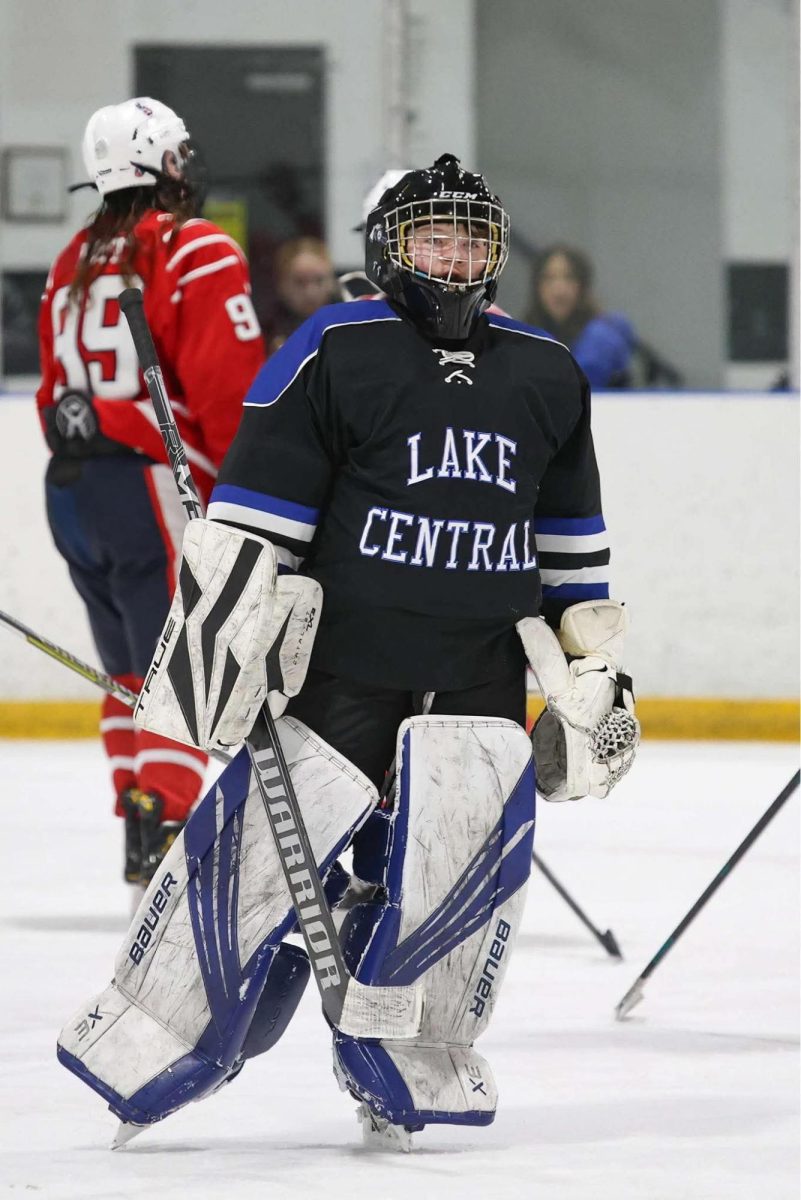
The clock struck zero and all of the skates on the rink came to an abrupt stop. Sophomore Charles Albers-Jones stood frozen on the ice, in awe of what he just accomplished.
He was only 9 years old and just got his first full shutout in a game, stopping 31 shot attempts.
For the first time in his career, he didn’t let a single puck slide past him.
“I remember looking up,”Albers-Jones said. “‘I have five minutes left in the third.’ I just need to hold it down for five (more) minutes. Four minutes left. Three, two, one, 30 seconds. And it just keeps ticking down. I remember, at 15 seconds, I’m like, ‘okay, I just gotta shut out.’ And then when it hit zero, it truly hit me. ‘I had gotten a shutout in my first full game.’”
After seeing his first hockey game at six years old, he immediately fell in love with the sport. This game introduced him to hockey player Pekka Rinne. After being mesmerized by Rinne and his performance the entire game, Albers-Jones was certain he wanted to be a goalie.
This game sparked his passion for hockey. Despite the ups and downs of the sport, it changed his life for the better, and he hopes to continue it for a long time.
Two days after this game, Albers-Jones signed up to learn how to skate and eventually progressed to private hockey lessons. Though he knew he wasn’t old enough to wear goaltender gear yet, he still got in the goal with his regular player gear and practiced.
When he was around 8 years old, he made the jump to organized hockey.
The first team he ever played for was the Junior Fuel for his 8U season. Then, after turning 9 years old, Albers-Jones joined the South Indy Sharks.
He played for the Sharks up until his eighth-grade year, but he had to take a break from the sport as a whole when he moved to Maryland, leading to a decline in his mental health.
“Taking a break broke me,” Albers-Jones said. “I was really excited to have another year with people I’d been playing with since I was six or eight or however old I was with some of those guys. And then taking that break, it really did hinder some of my development as a player.”
After moving back to Indiana, he joined the Sharks for one last season before joining the Lake Central Indians, the team he plays for now.
When Albers-Jones joined the Indians, he met his current coach, Robert Geenen. Geenen has been a big support and anchor for Ablers-Jones since meeting him.
“He didn’t know anybody walking in,” Geenen said. “But I think him becoming a little more outgoing throughout the season, I think got a lot more relationships with a lot of the players.”
Since joining the Indians, he has had long and exhausting practices every Monday through Friday, with rest days on Thursday.
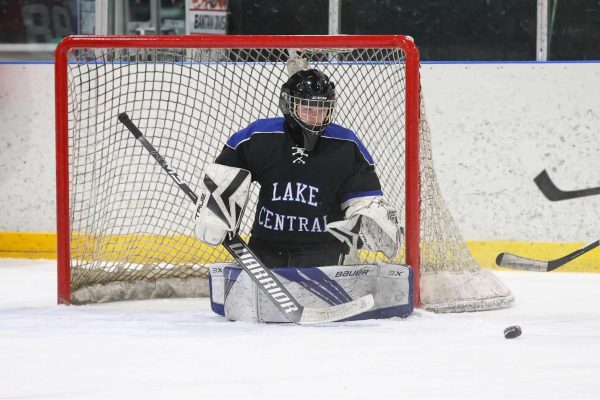
On practice days, he drives two and a half hours to the facility his team uses, the Midwest Training Center and Ice Rink, and he doesn’t drive back until late at night.
Though practices are long and the facility is a good distance away, Albers-Jones continues to stay with his team because of the culture and the people within the program.
Having long days during the season resulted in some disadvantages to Albers-Jones’ mental and physical health.
“A lot of people think it’s more physical, but for goalies, it’s a lot more mental,” Albers-Jones said. “The way you deal with it, again, it goes back to remembering your good times.”
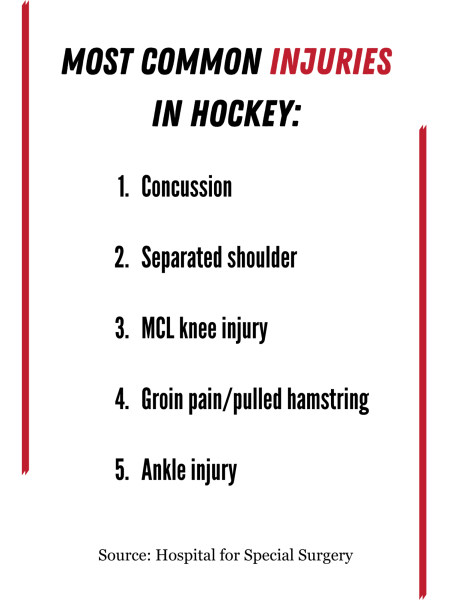
Since hockey is a very dangerous sport, players feel extra stress about being cautious throughout their games, which adds on to their mental and physical tolls of pursuing this sport.
Because of the danger level of the sport, Albers-Jones has fought through many injuries. Most notably, he tore the left part of his groin three times and the right part of his groin four times.
“But it’s also dangerous in the sense (that) it’s repeated injuries,” Albers-Jones said. “Not properly taking care of yourself, (it) can repeat.”
Though his injuries do not have an impact on him now, they may have a harmful effect on his physical health in the future.
Alongside his groin injuries, he also is at risk of brain damage or seizure activity due to his helmet not being proper quality.
Though it is a hard and demanding sport, in his eyes, it is all worth it.
With all the love he has for his sport, he has high hopes in continuing his career and advancing to a professional level.
“There’s a lot of options in the hockey world, and I truthfully do not intend to leave hockey until I can’t,” Albers-Jones said. “I want to play till I cannot play anymore.”
Recently, Alber-Jones has been talking to many coaches. They’ve even discussed the potential of offers.
He mainly aspires to play at Santa Rosa, a college in California.
“They’ve been very outgoing in the recruitment process,” Albers-Jones said. “They’ve just been very nice to me and they have an up and coming program. It was very nice to see (and) again, it comes down to lots of culture and ability for success there.”
After college, his “perfect” career consists of playing in Europe for a couple of years, coming back to the states and playing in the Federal Prospect Hockey League, then getting called up to the third division of professional hockey, the ECHL.
Knowing that not everything always goes as planned, Albers-Jones has a backup plan in mind. His more realistic plan includes bouncing around from Europe to the Federal Prospect Hockey League.
Though his future is uncertain, he knows that he will continue to stay in the world of hockey because it is a very impactful part of his life.
“I think back to some of my old coaches. What would they think if I gave up now,” Albers-Jones said. “ It’s persevering both for yourself and those who have given so much for you to get to that position.”
