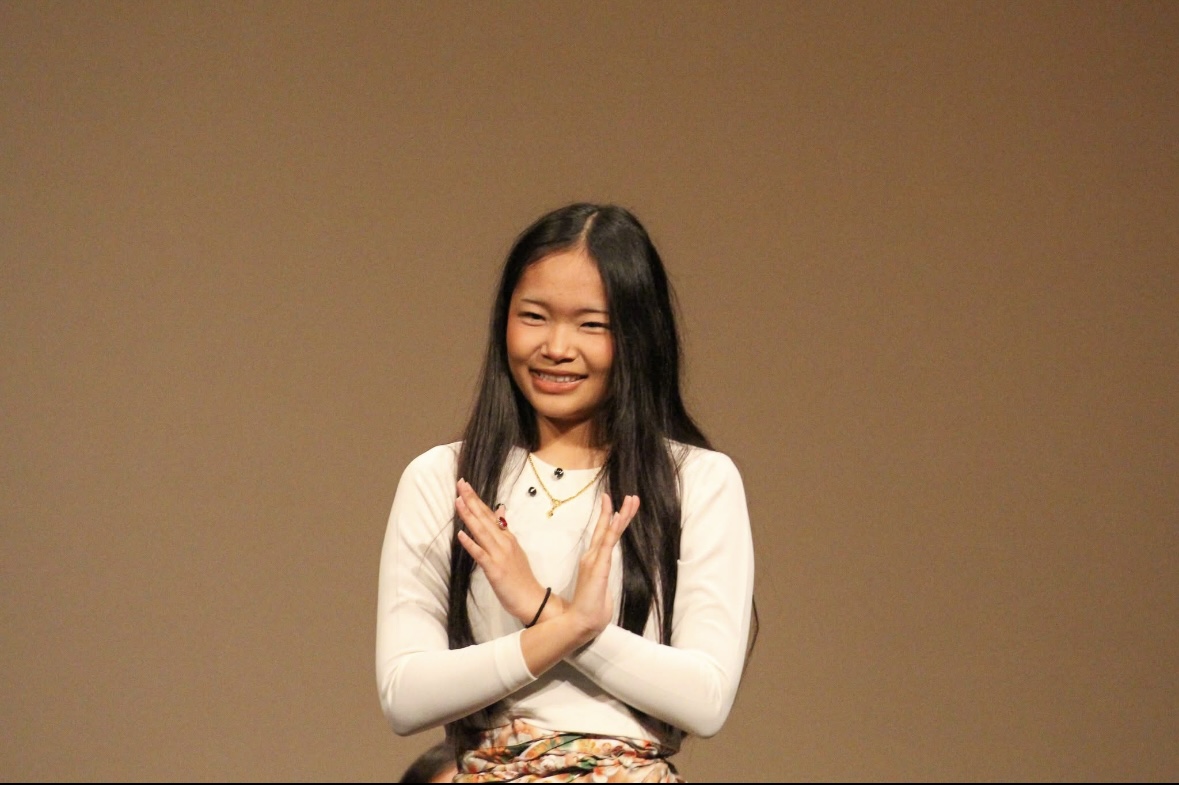
Beneath the shining spotlight, junior Meriam Sung stepped forward, the chill of the marble floor seeping through her socks as the music swelled to life.
The audience sat cloaked in shadows, yet their silent attention weighed heavily on her. At first, nerves took her, and the pressure of performing pressed in on every side.
But as the Thingyan dance, a traditional Burmese water dance, unfolded, her unease began to slip away.
The beat of the music and the synchronized movements of her group steadied her spirit. What began as fear shifted into calm, then blossomed into joy.
By the time the final note dissolved into silence, the light above no longer felt daunting but radiant. What had once filled anxiety now left her with pride and relief.
For Sung, the performance carried more meaning than just steps on stage. It was a bridge between herself and her Chin heritage. Each movement allowed her not only to share
her passion, but also to preserve a tradition that ties back to her roots.
“I feel as if when I dance, I’m getting a step closer to my heritage,” Sung said. “I’m able to fully comprehend what my culture is in general.”
Her love for dance began early, first through imitating K-pop routines, later deepening towards a cultural shift by her cousin, a dance instructor.
At first, she hesitated, doubting her ability to participate in such a custom.
“When she recommended me to do it, I was hesitant ‘cause I was like, ‘I’m not one of the best dancers out there, so why would you recommend me?’” Sung said. “But then, later on, I agreed to do it.”
In time, she realized these dances were more than choreography. They were a way to honor and carry forward her culture.
That connection hadn’t always come easily. When Sung moved to Michigan during her freshman year, she found herself in a predominantly white neighborhood where diversity was scarce. As one of few Asian girls, she often felt like an outsider.“When I moved to Michigan
and was surrounded by a predominantly white neighborhood, I just didn’t really understand learning my culture,” Sung said. “All I cared about was fitting in with my school and also fitting in with the environment I was surrounded by.”
After moving back to Indiana, she reconnected with her roots once more. From then on, she began to embrace her heritage and dancing became her language of expression.
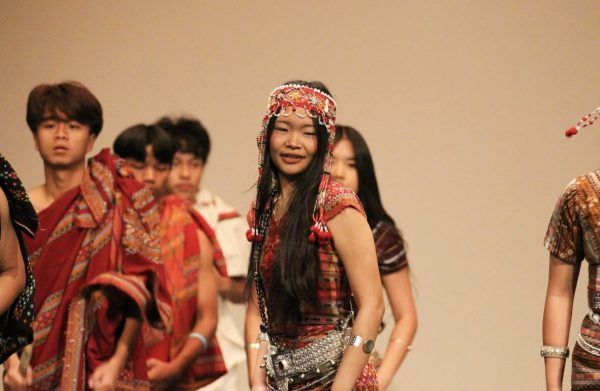
From the clapping bamboo sticks of Rua Kha Tlak to the sharp motions of Lamlian Lehlam, her performances embody the richness and variety of her culture.
She has shared these dances at SHS events, church celebrations and even university showcases. Each practice left with blisters, sweat and fatigue but also with joy.
Bawitha Lang, a senior and President of the Myanmar Student Association (MSA) at SHS, has performed alongside Sung at both school and community events. Though they weren’t close when they first met, their shared dedication to dance strengthened their friendship.
“Meriam has always been such a bright person,” Lang said. “Even if the environment is bad, she never lets that bring her down. She’s very smooth with moves and kind with her actions.”

Looking ahead, Sung hopes to keep pursuing her passion for dance and even dreams of modeling in the Chin Traditional Fashion Show one day.
Her involvement now extends beyond personal fulfillment. Through MSA, she helps teach cultural dances to students interested in learning the traditions themselves.
“Whenever you feel lost or whenever you want to learn more about your culture, I feel like dancing is a way to understand it more,” Sung said.