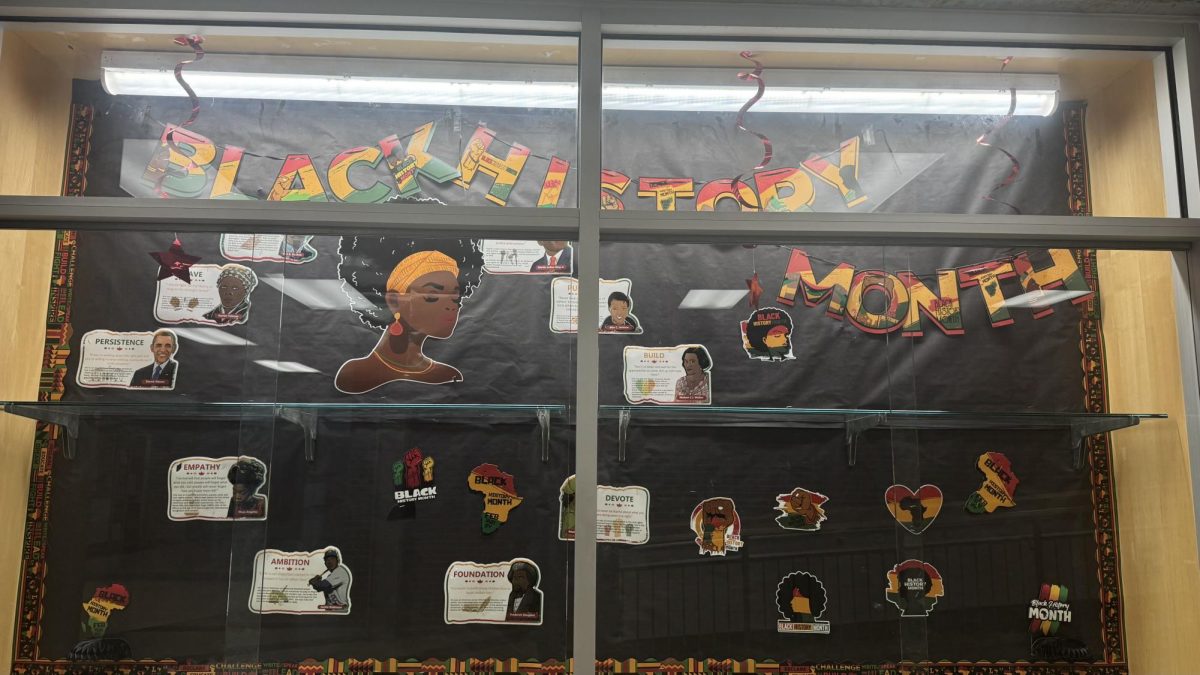
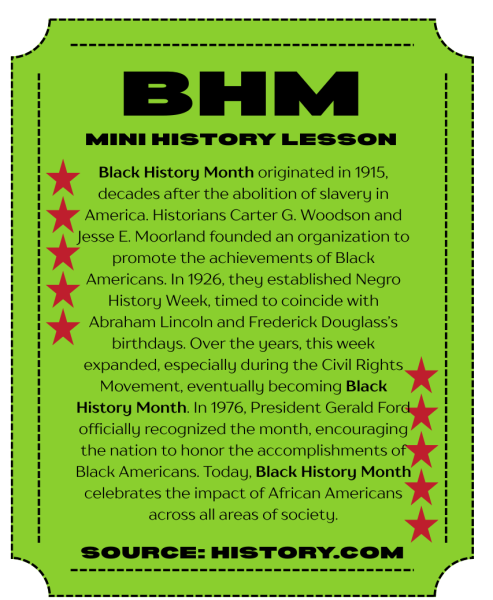
Every February, schools across the country pause to recognize Black History Month, a time dedicated to honoring Black culture, history and contributions.
At SHS, Black History Month is acknowledged, but many students feel that the attention it receives feels limited, leaving room for deeper understanding and stronger cultural appreciation.
For senior Shakyra Maureedullah, this month is more than a tradition. It is an opportunity for education, representation and respect within a diverse school environment.
“Black History means a lot of things to me,” Maureedullah said. “It means success, power, unity and just having a voice.”
Currently, SHS recognizes Black History Month through hallway displays, classroom lessons and acknowledgments such as Martin Luther King Jr. Day.
However, Maureedullah feels that these efforts feel minimal and that much of the curriculum focuses on the same topic each year.
“Well, when I had history, we talked about slavery,” she said. “That’s the biggest thing, but that’s pretty much it as far as in classes. There’s no really big outings or events that they do for Black people.”
 Similarly, senior Kamiah Davis-Muff shares a similar observation in regards to the limited recognition of Black History Month.
Although she acknowledges the efforts SHS has made, she doesn’t believe they are enough to leave a meaningful impact on students.
“They don’t really do anything about it,” Davis-Muff said. “We have a (display) near the front main office and it has Black History Month on it… but it’s not really acknowledged as much.”
Both students also discussed the Black Student Union (BSU), which was once created to provide a space for deeper learning and discussion. Since then, the club has ceased activity after its members graduated.
“…But the people that started it, they graduated so it kind of just died out, and nobody is coming to the meetings anymore, and we haven’t been discussing Black History Month so it kind of just died down,” Maureedullah said.
During its active period, BSU allowed students to explore Black history beyond commonly taught figures.
“We talked about just under-the-surface level things we wanted to talk about Black history because everybody knows about Malcolm X, Rosa Parks, MLK,” Maureedullah said. “So we wanted to talk about other people like Bessie Coleman and other activists, other important Black people.”
While BSU is no longer active, she believes that the celebration of Black History Month does not solely rely on school organizations. She even states that they can still engage with its history and culture independently if they see its importance, as long as it’s been researched, learned and explored respectfully.
There has also been speculation about the club’s potential state of being renewed, though nothing has been confirmed at the moment.
Contrary from a staff perspective, SHS counselor Lamont Rascoe believes that SHS takes pride in supporting the diversity it holds year round. He emphasizes that no group is prioritized over
another.
“…SHS is very diverse,” Rascoe said. “I think that they acknowledge all groups individually and also collectively, but I don’t see any one group that outshines another group…”
Despite the differing viewpoints, students agree that stronger recognition could positively impact school culture.
“So the more you know about Black people, the more you would probably respect them,” Maureedullah said.
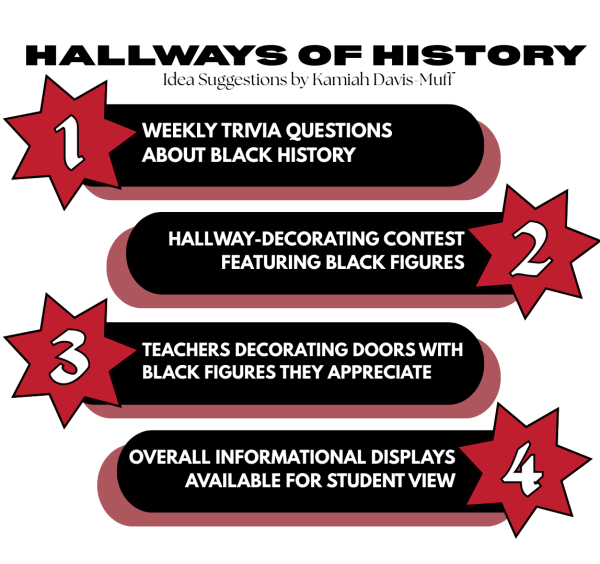
Davis-Muff has even suggested interactive approaches to celebrating Black History Month in SHS, ranging from trivia questions and hallway decorations contests to overall teacher-led displays for the students to see.
“…You’re not forcing kids to learn about it, but you’re giving them the opportunity to learn about it,” Davis-Muff said.
As SHS continues to grow as a diverse community, students say Black History Month offers an opportunity to not only remember the past but also to strengthen inclusion, respect and understanding throughout the school.
“I think it strengthens the diversity because it gives people a chance to understand something different,” Maureedullah said. “You may not be Black yourself, but you’re learning about other races and ethnic groups, and it helps you connect with other people of that sort.”