

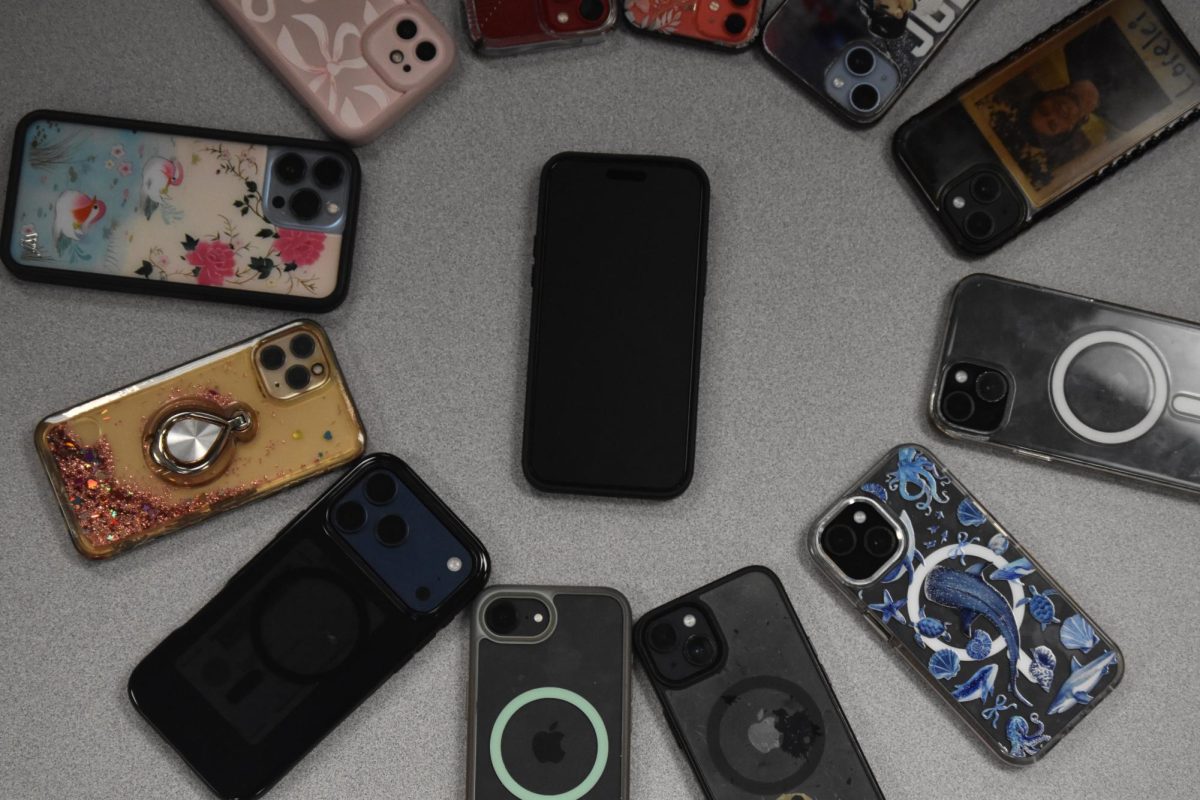
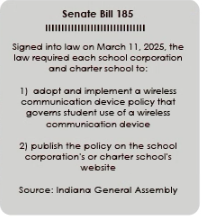
Governor Mike Braun gave his stamp of approval for Senate Bill 78 on March 6, putting Indiana’s first bell-to-bell cellphone ban in place. While 2024 legislation requires public and charter schools to restrict cell phone use during instructional time, Senate Bill 78 takes it to the next level.
Starting July 1, students will no longer be able to have their phones during the school day. This new law means that students will have to say goodbye to their cell phones at the first bell and wait until the end of the day to retrieve them.
“The ban not only reinforces student focus in the classroom but also social presence in the lunchroom, hallway (and) study hall,” Braun said in a press release. “Kids need to learn and grow without the big tech.” Braun believes that the bill can restore student engagement and interaction, but schools are a little unsure as to how they should administer it. Superintendent Patrick Spray says that Perry Township will begin mapping out their plan this spring,  but he currently doesn’t know all of the answers.
SHS Principal Amy Boone and the Southport administration are facing the same challenge. Although they have spoken with department chairs to collect ideas, Boone says that they’re still learning to navigating through all of the little cracks.
“I don’t know exactly what it’s going to look like yet, but I know as we’re developing it, we’re going to get consistent feedback because there’s little nuances,” Boone said.
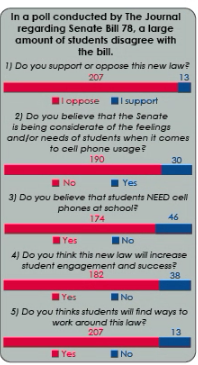
After they wrap up their ‘information gathering stage,’ the SHS administration hopes to conduct a run towards the end of this school year to give students a preview of the procedures. Although, the future is uncertain, one thing is sure, SHS students heavily oppose it. During the week of the Bill’s signing,
The Journal conducted a poll asking students to comment on cell phone usage and the dispute behind the Bill. In the 220 student responses acquired, 94% of students opposed the Bill. Freshman Sadie Salaz is one of the many individuals who oppose the bill. She, alongside many others, fears that the absence of cellphones will come back to haunt them during emergencies.
“I just don’t think that schools in America are really safe yet to not have a form of communication…,” Salaz said.
For teachers, however, the matter goes further than simply agreeing or disagreeing. The concern lies in the manner in which the bill will be funded. Spanish teacher Conner McNeely is in favor of this bill, but he questions whether or not the legislature will take financial responsibility for the needs of this bill.
“I think there needs to be more teeth behind the banning of cell phones. The current ban that they had in place of banning it during instruction time, clearly did not work…,” McNeely said. “So I support it, but I don’t support the legislature not funding that bill.”
Likewise, English teacher Sam Hanley supports the bill, but he doesn’t believe it will prove to be an effective solution for the lack of student engagement. Instead, he blames teachers for the fallout between students and participation.
“This is (the) teachers’ faults. Teachers who allow their classrooms to be places where students aren’t engaged (are at fault),” Hanley said.
Additionally, Hanley believes that the effectiveness of this bill will be weak since other distractions will still be present in school.
“(Even without cellphones), I think you still have devices in front of you, and as long as students aren’t being asked to engage and teachers aren’t engaging with students during class time,” Hanley said. “If all we’re doing is staring at screens, that Chromebook is gonna take off where the phone left off.”
While there are many gaps to fill in, Boone intends to approach this learning curve with an open mind. “You sometimes figure something out and you feel like you got a good flow, and the rules change,” Boone said. “So you adjust and adapt and have to be flexible.”
